Do I need an accessibility statement on my website?
Accessibility Statement
13 Mar 2026 • 5 mins
Do I need an accessibility statement on my website?
Accessibility Statement
13 Mar 2026 • 5 mins

Summary
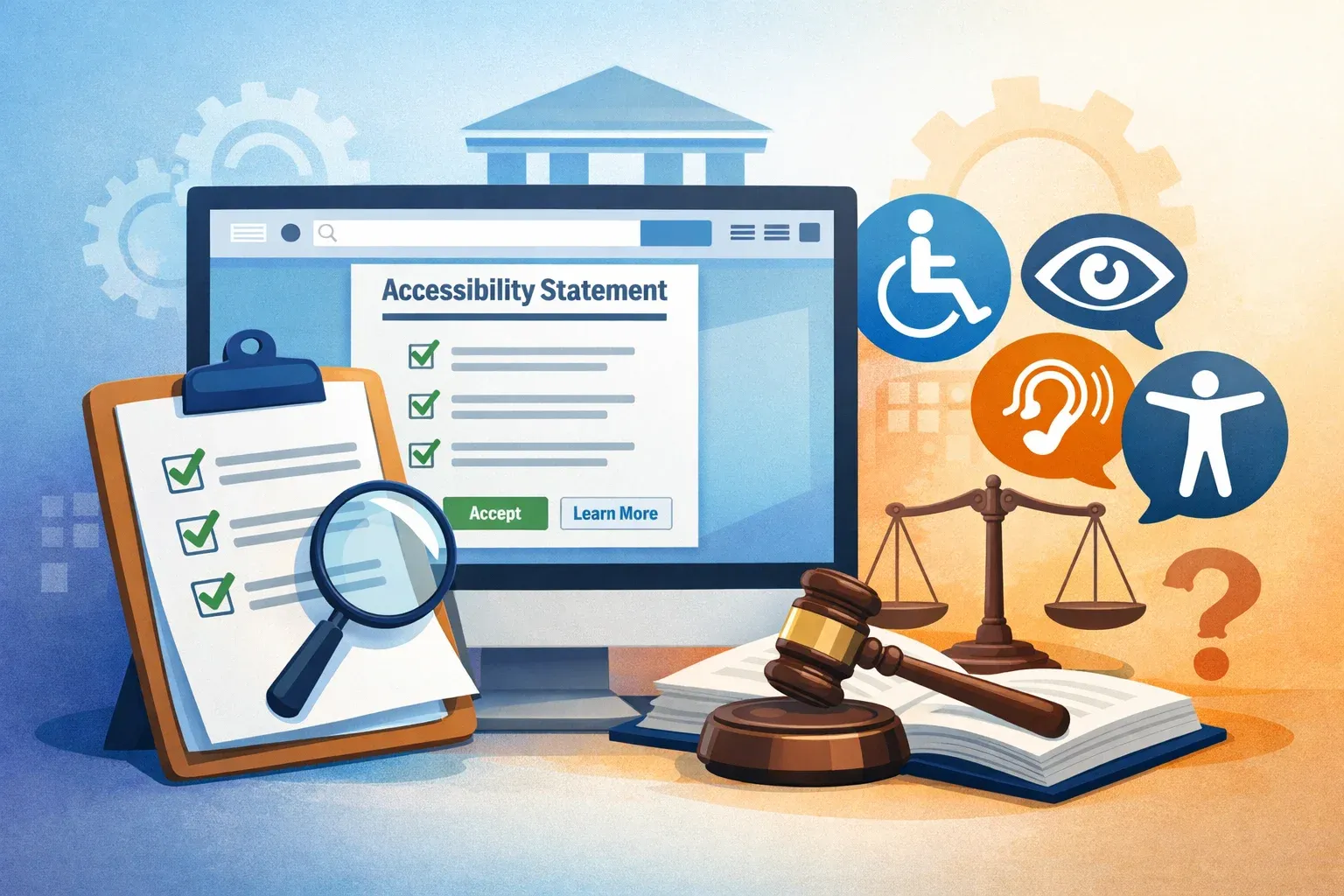
Accessibility statements explain a site's accessibility level, known barriers, and contact options. They're legally required for some (EU/US public sector), build trust, and should be updated regularly as part of ongoing accessibility maintenance.
Publishing an accessibility statement isn’t just about meeting standards; it’s about showing that your site is open to everyone. It signals that you’ve considered different user needs, that you’re working to remove barriers, and that you welcome feedback to improve further. For visitors, it creates transparency. For your organization, it demonstrates responsibility and inclusivity.
What is an accessibility statement?
An accessibility statement is a public page on your website that explains the level of accessibility of your website. It tells people which features are designed to help them, where some barriers might still exist, and how they can reach you if they need support.
In simple terms, it works as both a guide and a promise. A clear statement shows that you take inclusion seriously and that you’re open to feedback. Many organizations also share details such as compatibility with assistive technology, their level of compliance with standards like the Web Content Accessibility Guidelines (WCAG), including WCAG 2.1 and the newer WCAG 2.2, and any planned improvements.
Who needs an accessibility statement?
Not every website is legally required to publish an accessibility statement, but many benefit from having one.
Public sector bodies: In the US, public sector websites must publish a statement under accessibility regulations.
Businesses and non-profits: Even when not legally required, a statement shows commitment to inclusivity and helps reduce the risk of complaints, especially in sectors such as e-commerce, education, and healthcare.
Global organizations: Rules differ worldwide. In the US, the ADA sets accessibility standards, while the UK Equality Act 2010 supports accessibility statements as part of compliance. A single statement can demonstrate awareness across regions.
For international businesses, the W3C Web Accessibility Laws & Policies list is a useful reference.
What should an accessibility statement cover?
A strong accessibility statement is clear and practical. It should include:
Standards used: State the WCAG level you’re aiming for, based on your earlier testing.
- Technical details: List the browsers, devices, or assistive tools your site works with.
- Third-party platforms: Link to accessibility policies for tools like social media or external portals you rely on.
- Conformance status: Note whether your site is fully conformant, partially conformant, or still being assessed.
- Alternative options: Offer ways to access content that isn’t yet fully accessible.
- Improvement plans: Share timelines for updates or fixes.
- Feedback channels: Provide more than one way for users to get in touch, such as email, phone, or a form.
For a full checklist, see the W3C-WAI guidance on accessibility statements.
Accessibility statement example
“We want everyone to enjoy shopping on our site. We follow WCAG 2.1 AA and test with screen readers. Some older PDFs are being updated. If you face issues, contact us at .”
Clear, human language makes your site approachable and trustworthy.
Who checks accessibility statements?
Accessibility statements aren’t just for show. They are often reviewed to make sure websites live up to the standards they claim to follow.
Regulators and auditors
In regions where accessibility is a legal requirement, such as the EU, public sector websites are monitored for compliance.
Users and advocacy groups
People who rely on accessible websites, and the organizations that support them, often review these statements to know what level of accessibility they can expect.
Industry peers and reputation
While accessibility statements don’t directly affect search rankings, they can influence how a brand is viewed. A clear, honest statement can strengthen trust among customers and partners.
Why do I need an accessibility statement?
The answer goes beyond compliance. The benefits are practical and user-focused:
Legal protection
Having a statement helps demonstrate that your business is taking proactive steps, which may reduce the risk of legal action.
Transparency
By outlining where your site is strong and where it still needs work, you show honesty.
Customer experience
A well-written web accessibility statement helps users know what to expect. If they face challenges, they know how to contact you for support.
Brand reputation
Businesses that publish accessibility statements are often seen as more socially responsible, which can strengthen loyalty and attract new customers.
While an accessibility statement doesn't protect against litigation if a site is not accessible, it demonstrates proactive effort to make the site more accessible, which can make a difference.
Where to put an accessibility statement
An accessibility statement is only useful if people can find it. The most common location is in the website footer, but you can also link to it from:
- Help menus
- HTML sitemaps
- About pages
Consistency is important. Use the same link name across your website and mobile apps so users always know where to look.
Keeping your website accessible
Accessibility is not a one-time task, it is an ongoing part of website management. Regular checks help catch issues early, and tools such as WAVE, Siteimprove, or Google Lighthouse make the process easier. For e-commerce and service sites, staying accessible means more people can browse, buy, and interact without barriers.
Need help writing or reviewing your accessibility statement? Get in touch and we can guide you through the essentials.