Inclusive e-commerce: Lessons from B Corp success stories
Accessibility
02 Apr 2026 • 2 mins
Inclusive e-commerce: Lessons from B Corp success stories
Accessibility
02 Apr 2026 • 2 mins
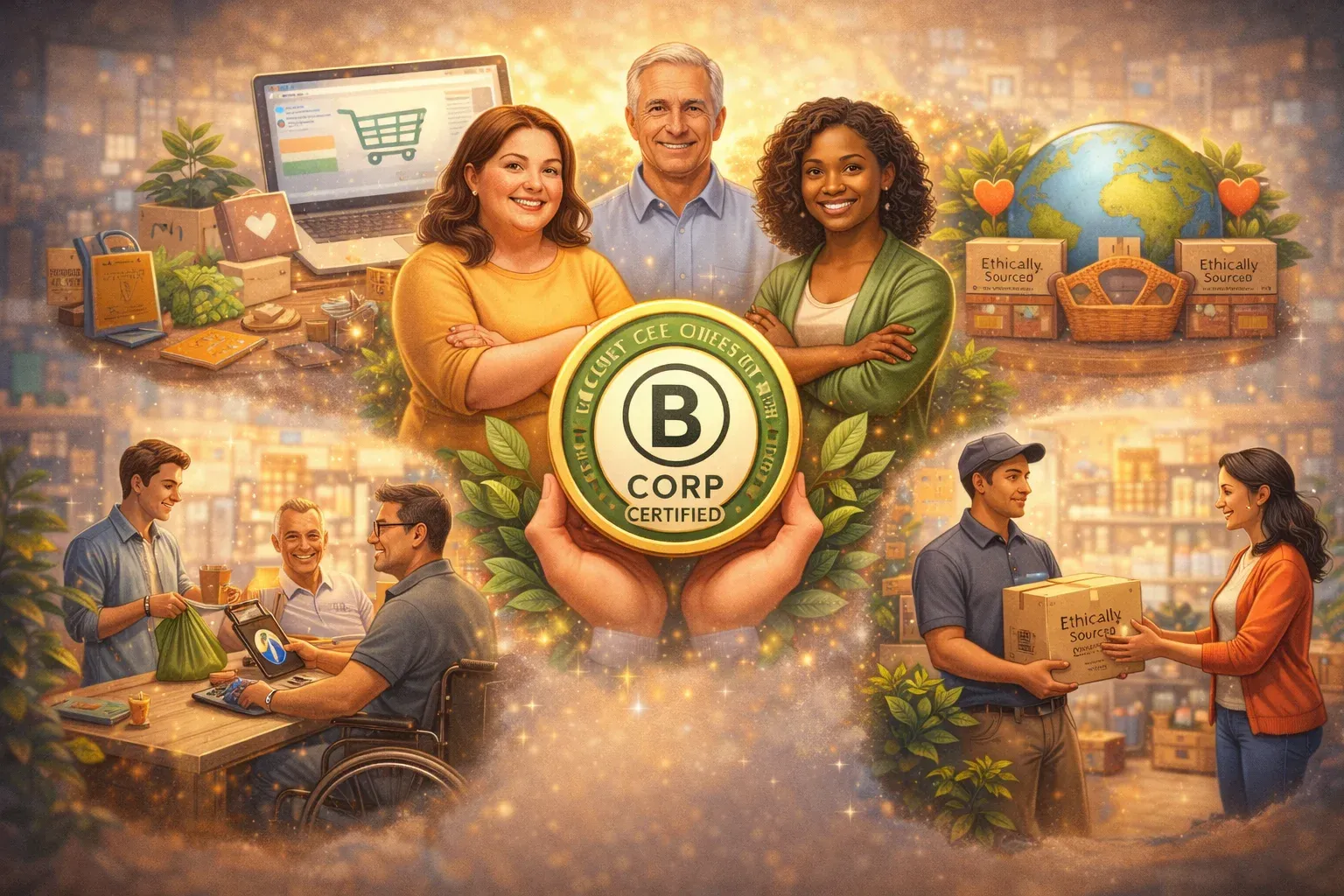
Inclusive commerce is quickly becoming a competitive advantage. As consumer expectations evolve, brands that embed inclusivity into every aspect of their business, from digital experience to product design, are gaining long-term loyalty and industry respect. Among the leaders in this space are B Corp-certified companies that prove inclusivity is more than simply ethical; it's strategic.
But what is a B Corp? Certified by the B Lab, B Corps are businesses that meet high standards of social and environmental performance, accountability, and transparency. Inclusivity is a central tenet of the B Corp ethos, woven into hiring practices, product design, marketing, and digital experiences.
Here's how three B Corp brands are integrating inclusivity into their business models, and the results they've been reaping.
Patagonia: Justice-driven storytelling
Outdoor brand Patagonia has long been a beacon for environmental activism, but its approach to inclusion runs deep. From showcasing diverse models in its campaigns to ensuring its site meets Web Content Accessibility Guidelines (WCAG 2.1) standards, Patagonia's messaging and infrastructure are aligned.
The lesson: Inclusive branding is authentic branding. Patagonia proves that long-term advocacy builds long-term trust.
Ben & Jerry's: Inclusive activism at scale
Ben & Jerry's blends bold social advocacy with digital accessibility. As a B Corp, the brand ensures its web content reflects its diversity, equity, and inclusion (DEI) values with readable layouts, accessible fonts, keyboard navigation, and alt text across visual content.
The lesson: Activism and accessibility go hand-in-hand. Ben & Jerry's reinforces its brand values by making sure all customers can engage with its messaging and campaigns equally.
Natura &Co: Global inclusion, locally grounded
Natura &Co, which includes brands such as Aesop and The Body Shop, demonstrates how a global B Corp can embed inclusive design at scale. Their e-commerce platforms increasingly prioritize WCAG compliance, ethical sourcing, and transparent product information that is accessible to all.
The lesson: A consistent commitment to inclusion, from supply chain to user experience (UX), can strengthen customer trust and fuel global growth.
Accessibility is a foundational part of inclusive e-commerce. An accessibility app allows brands to meet the standards of WCAG 2.1, the Americans with Disabilities Act (ADA), the European Accessibility Act (EAA), and the UK Equality Act 2010, without developer input or disruptions to site design. Moreover, an accessibility app can help companies meet their B Corp inclusion goals, improve the user experience for the one in six people with disabilities worldwide (WHO, 2023), and open up access to a wider market. A win-win for everyone.