Matching tools to disabilities for accessibility features that truly work
Accessibility
01 Apr 2026 • 2 mins
Matching tools to disabilities for accessibility features that truly work
Accessibility
01 Apr 2026 • 2 mins


An accessible website is about matching the right features to the right needs so every visitor can navigate, understand, and interact with your content. With one in six people worldwide living with a disability (World Health Organization, 2023), designing for accessibility is also designing for better business outcomes.
Let's break down common disabilities and neurodiversities, and the web accessibility features that best support each group.
Visual impairments
Visual impairments include blindness, low vision, and color blindness, involving an inability to perceive text, images, or color-coded information. Key features to focus on for visually impaired users are:
Alt tags for meaningful image descriptions
Image readers to read text embedded within images
Color contrast optimization and dark mode for visual clarity
Screen masks to reduce glare and improve focus
Hearing impairments
Partial or complete deafness can mean a user misses important audio content, including spoken instructions in videos. Incorporate the following features to assist hearing-impaired users:
Real-time video captions for all audio
Sign-language translation for videos and captions
Text-based transcripts for multimedia content
Cognitive and learning differences
People with cognitive differences include those with dyslexia, attention deficit hyperactivity disorder (ADHD), and autism, among other neurodiverse conditions that result in distractions from cluttered layouts or difficulty processing complex text. Assist users by adding features such as:
Simplified text that is at a Grade 9 reading level
Decluttering content to remove unnecessary visual noise
A reading ruler and reading guide for focus
Customizable color backgrounds to reduce sensory overload
Mobility and motor impairments
Difficulty using a mouse or making precise movements affects many people, including the elderly. Ensure your website is accessible to them by adding the following features:
Keyboard-first navigation
Click-on-hover for users with limited click control
Large cursor customization
Why matching features to user needs matters
Matching features to user needs not only reduces legal risk under regulations such as the Americans with Disabilities Act (ADA), the European Accessibility Act (EAA), and the UK Equality Act 2010, but also increases your potential customer base, strengthens brand trust, and drives long-term growth.
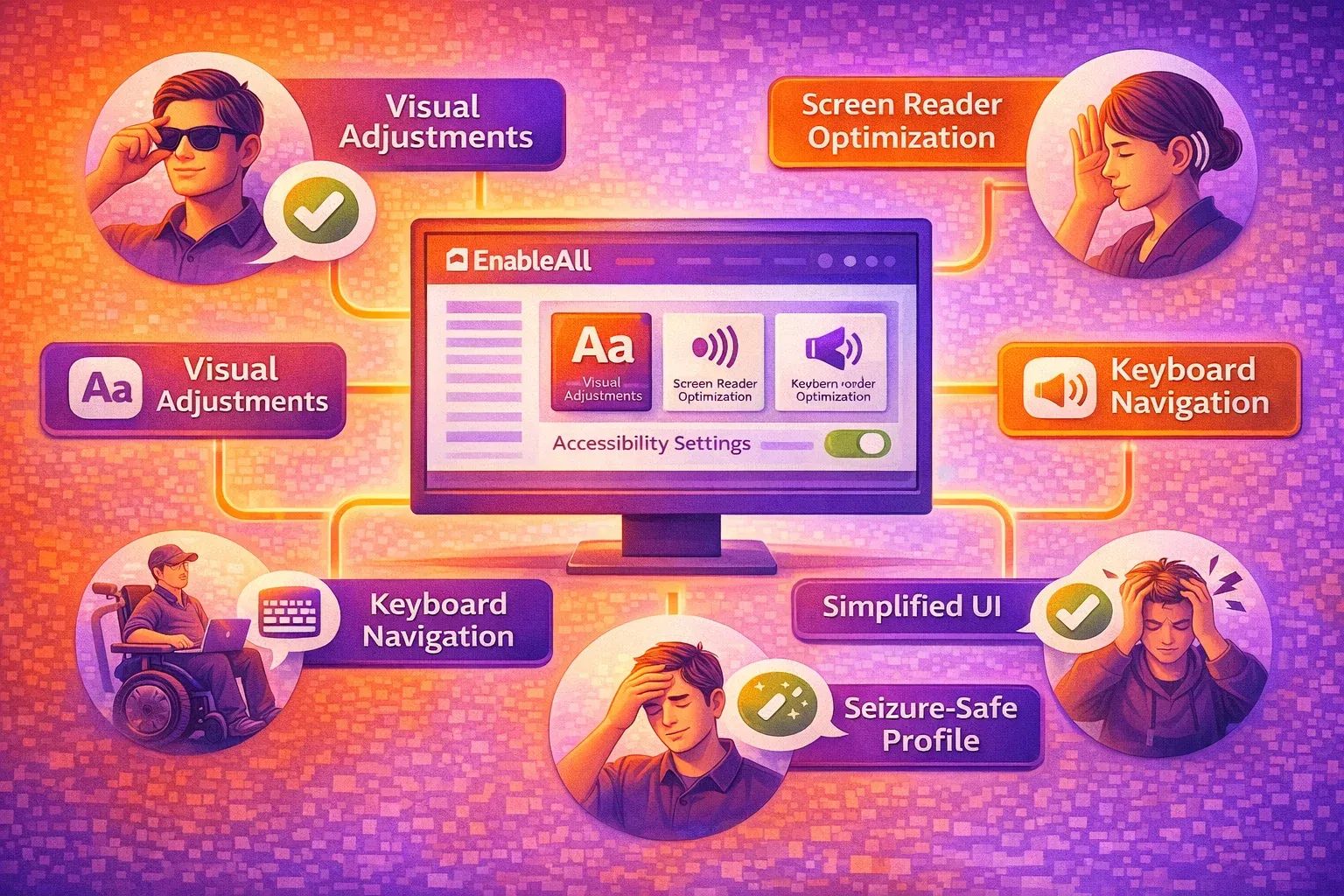
EnableAll's automatic code-fix capabilities ensure these features are implemented instantly, with no developer time required and no slowing down of your website. Additionally, EnableAll provides full-site language translations with AI-enhanced e-commerce context, among other features, all of which are included in every plan, so businesses of all sizes can deliver truly inclusive digital experiences.
Inclusive design is good design. With EnableAll, it's also effortless.