EnableAll logo
Back to Blog

What is the European Accessibility Act 2025?

European Accessibility Act

13 Mar 20265 mins

Share

What is the European Accessibility Act 2025?

European Accessibility Act

13 Mar 20265 mins

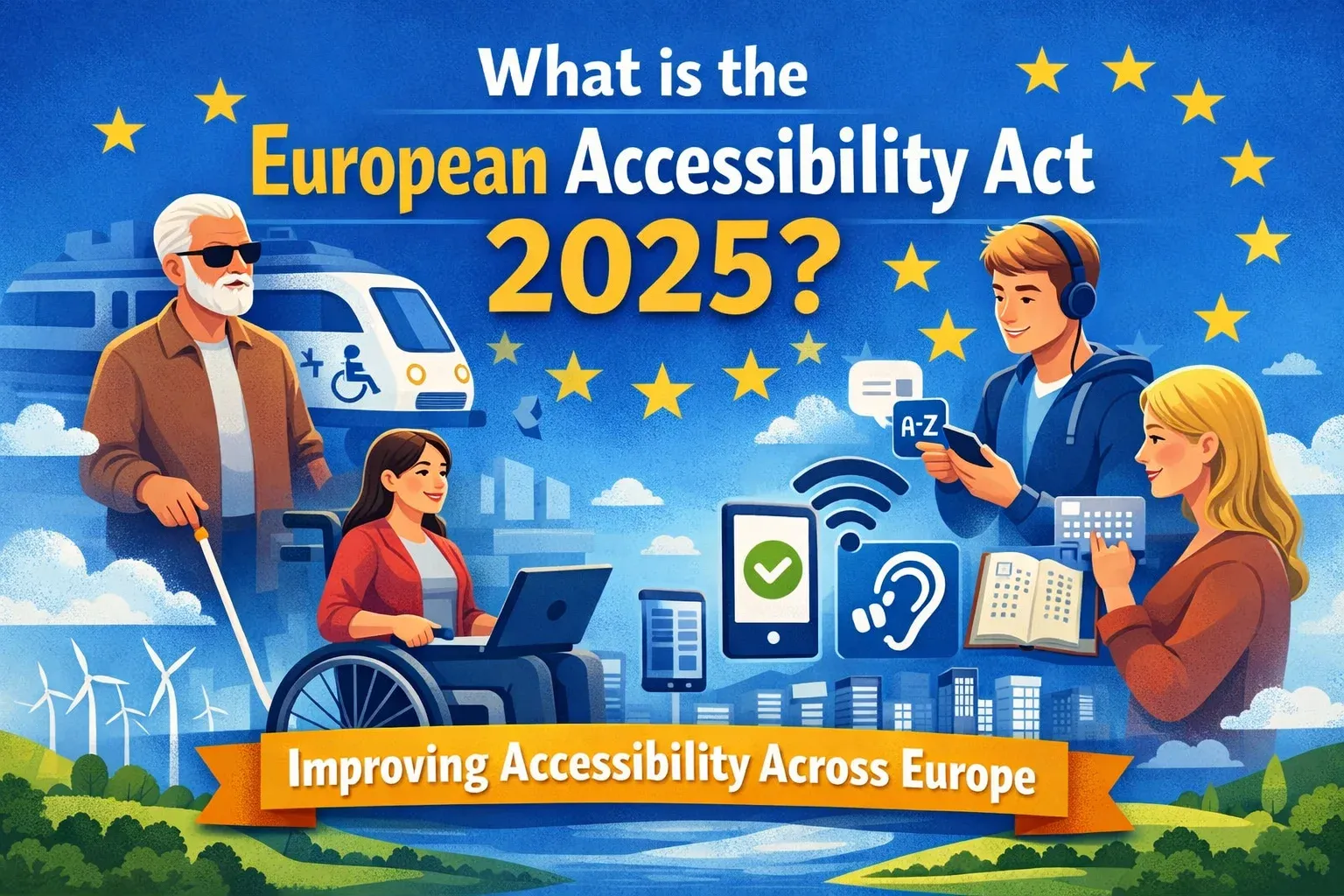
Banner titled 'What is the European Accessibility Act 2025?' showing people using assistive technology in a European city.

The European Accessibility Act 2025 sets consistent rules to make technology, services, and everyday tools usable for all. It is more than a law; it creates equal opportunities by ensuring websites, apps, and devices are accessible. The act benefits users with better experiences and helps businesses expand their reach while reducing risks.

When did the European Accessibility Act come into effect?

The act took effect on 28 June 2025. From that date, new products and services must comply, while existing ones may have transition periods. Businesses should begin preparations now to avoid last-minute challenges.

Who does the act apply to?

The act applies to both public and private organizations that sell products or services within the European Union. This includes:

  • Large businesses that create or distribute products covered by the act.
  • Service providers in areas like banking, transport, and e-commerce.
  • Digital platforms that sell goods or offer online services in the EU.

Small businesses may have some exemptions, but if they are part of supply chains or work with larger companies, accessibility still becomes important. For most organizations, the act is not optional.

Products and services covered by the EAA

The scope of the act is wide. It covers everyday tools and services that people rely on, including:

  • ICT products such as computers, laptops, smartphones, and e-books.
  • Self-service machines like ATMs, ticketing systems, and check-in kiosks.
  • Transport services, including booking websites and apps.
  • Banking services, such as online banking platforms and apps.
  • E-commerce platforms where goods and services are sold online.
  • Audiovisual media services and e-readers.

By standardising accessibility across these areas, the EAA reduces barriers and creates consistent rules for the whole EU market.

Requirements under the EAA

Compliance is not just a box-ticking exercise. Businesses need to follow recognized accessibility standards:

WCAG 2.1 and WCAG 2.2: These guidelines define how digital platforms should be perceivable, operable, understandable, and robust.

EN 301 549: A European standard that sets accessibility requirements for ICT products and services.Accessibility statements: Organizations must publish clear information about how accessible their services are, what barriers remain, and how users can get help.Inclusive design principles: From clear navigation to keyboard access, services must be built to support a wide range of users.

Following these standards ensures that businesses meet the law while also improving usability for everyone.

Steps businesses should take now

Even though the European Accessibility Act has already come into effect (28 June 2025), many businesses are still in their transition period. Steps to prioritise today include:

Audit your current systems – Test websites, apps, and services against WCAG 2.1/2.2.Fix high-priority barriers – Address issues like missing alt text, poor contrast, or lack of keyboard navigation.Update your accessibility statement – Be transparent about your progress and timelines.Train your teams – Designers, developers, and customer service staff should all understand accessibility basics.Invest in tools and support – Use accessibility checkers, plugins, and expert reviews to make changes manageable.

Acting now not only reduces the risk of fines but also spreads the workload, making compliance less stressful.

What to do next (and when)

Compliance is a staged process. After the initial fixes, businesses can phase improvements:

Immediately: Ensure core services and products meet accessibility standards.Over the next year: Update legacy systems like older PDFs, videos, or archived apps.Ongoing: Review new features before launch to avoid creating new barriers.

Treating accessibility as an ongoing process makes compliance less overwhelming. It spreads the workload and helps businesses focus on the most urgent tasks first.

What are the risks of non-compliance?

Ignoring the act is not just a legal risk. The consequences can affect finances, reputation, and customer trust.

• Legal penalties: Each EU country can impose fines or restrict non-compliant products from the market.• Financial costs: Fines may range from thousands to tens of thousands of euros per violation.• Reputation damage: Customers and advocacy groups may publicly challenge companies that fail to be inclusive.• Lost opportunities: A lack of accessibility can cut businesses off from millions of potential customers.

For businesses, it is cheaper and smarter to comply than to face these risks.

Next steps to take to ensure EAA compliance

Compliance is not a one-time project. It requires ongoing attention as technology and standards evolve. Businesses can stay ahead by:

● Building accessibility into every project rather than treating it as an add-on.● Monitoring performance regularly using accessibility checkers and audits.● Engaging users with disabilities to test services and provide feedback.● Updating accessibility statements as improvements are made.

By making accessibility part of routine website and product management, companies can meet the EAA, reduce risks, and build stronger relationships with customers.

Closing thought

The European Accessibility Act 2025 is a turning point for digital inclusion. It sets clear rules, but it also brings opportunities. Companies must act now to not only avoid penalties but also improve customer loyalty, trust, and market reach.

In just a few clicks.

EnableAll accessibility widget icon
Facegym logo
Unhidden logo
BuDaGirl logo
Sabatino logo
Trend Tonic logo
Antler logo