EnableAll logo
Back to Blog

What's the difference between the EAA and WCAG?

European Accessibility Act

31 Mar 20262 mins

Share

What's the difference between the EAA and WCAG?

European Accessibility Act

31 Mar 20262 mins

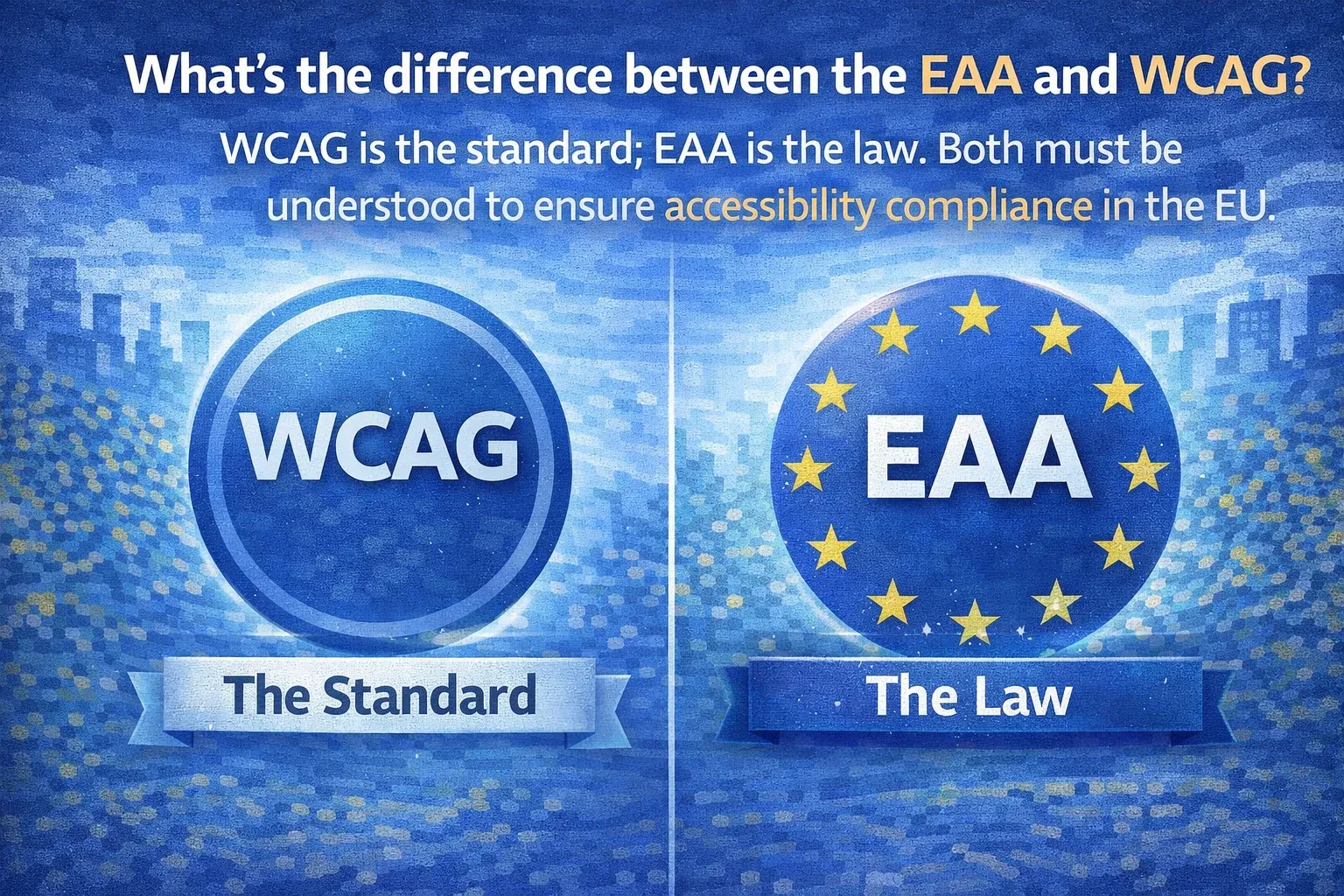
Split illustration titled 'What's the difference between the EAA and WCAG?', labelling WCAG the standard and EAA the law.

With digital accessibility becoming a legal necessity across the globe, e-commerce businesses need to understand the difference between two of the most important frameworks: the European Accessibility Act (EAA) and the Web Content Accessibility Guidelines (WCAG). While they are closely related, they serve different purposes. Here’s how they compare, and why both matter.

What is WCAG?

WCAG is a global standard developed by the World Wide Web Consortium (W3C). It outlines how to make digital content more accessible to people with disabilities. WCAG is organized into three levels of compliance:

Level A (minimum)

Level AA (ideal for legal compliance)

Level AAA (highest standard)

It focuses on four principles: content must be Perceivable, Operable, Understandable, and Robust (POUR).

What is the EAA?

The EAA is a regulatory law passed by the EU to ensure that certain products and services, including e-commerce websites, are accessible to everyone, regardless of ability. The EAA mandated that by June 28, 2025, businesses selling in the EU had to ensure their digital offerings meet accessibility standards.

The key differences

WCAG is a technical standard, whereas the EAA is a legal requirement.

The EAA references WCAG (primarily Level AA) as its baseline for compliance.

The EAA applies to specific business types, such as e-commerce, banking, ticketing, and transport, while WCAG is voluntary unless referenced by law.

Why it matters for your business

Failing to comply with the EAA means your products or services may no longer be sold legally in EU markets. However, understanding WCAG is essential to achieving that compliance.

This is where an accessibility app can make a real difference: it automates fixes aligned with both WCAG guidelines and EAA requirements without the need for complex, expensive development work. It helps businesses reduce legal risk, increase revenue by tapping into the one in six consumers with accessibility needs (WHO, 2023), and drive long-term growth by strengthening trust and brand reputation.

Think of WCAG as the "blueprint" and the EAA as the "building code". One guides best practices while the other enforces them. To stay competitive and compliant in 2025 and beyond, understanding both and applying them with the right tools is essential.

In just a few clicks.

EnableAll accessibility widget icon
Facegym logo
Unhidden logo
BuDaGirl logo
Sabatino logo
Trend Tonic logo
Antler logo